
By Jeff Powell, CEO
Elevage Partners | June 1, 2026
In 1915, nobody was worried about horses. There were 26 million of them.
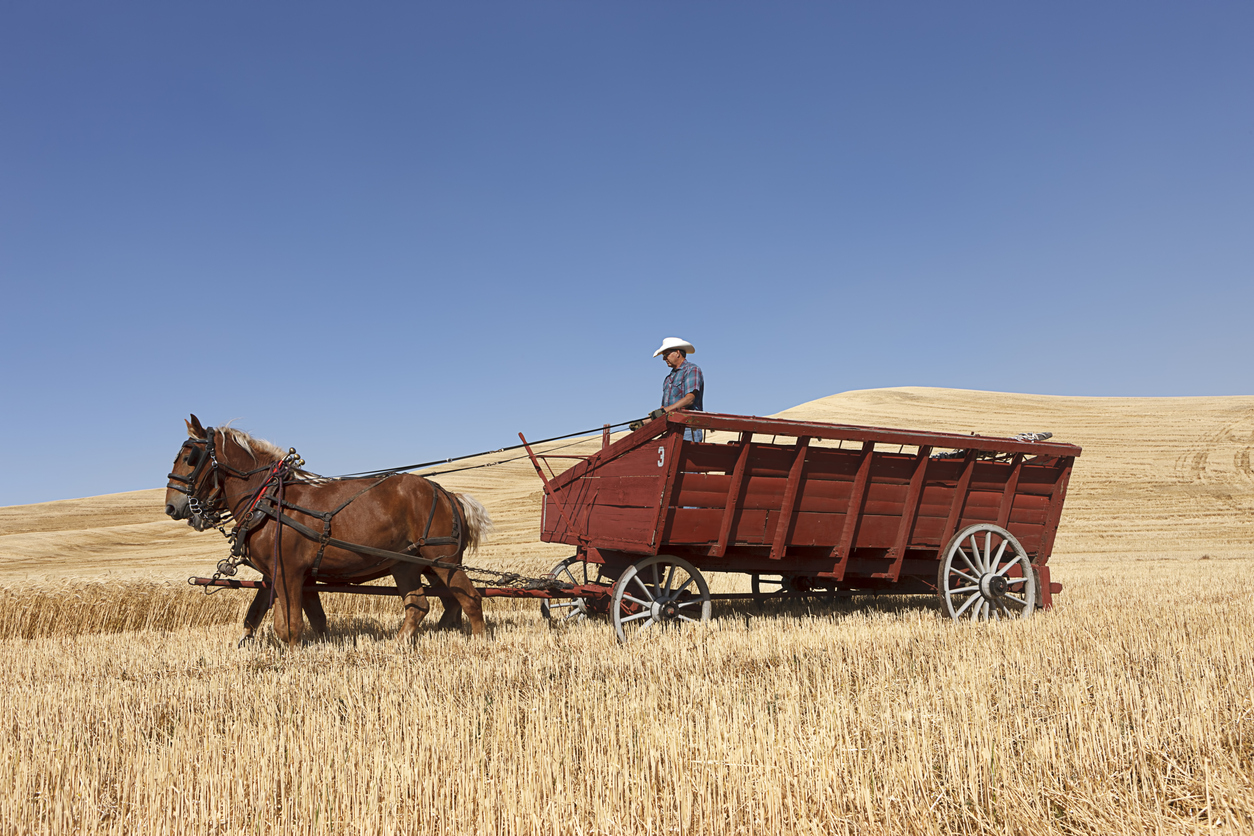
They powered the farms, moved the freight and kept the cities running. The system worked. Then it didn’t. By 1960, the count had dropped to about three million. The ones that remained were mostly recreational.
Nobody asked the horses how they felt about the tractor.
I’ve been thinking about that story a lot lately, and whether the AI transition we’re living through right now is that kind of story, or a different one. Because there’s another analogy from recent history that points somewhere else entirely. And the difference between the two matters a great deal for how we think about where to invest.
The Horse Problem

What makes the horse story different from most technology transitions is that there was no “horse 2.0.” The horse didn’t adapt. There was no adjacent role that absorbed the displaced animals at scale. The role simply ceased to exist as an economic category.
That’s the version of the AI story that gets the most attention right now, and it’s not entirely wrong. Some jobs will be the horse. The question is which ones, and whether that’s the whole story.
The Spreadsheet Story
In 1979, a Harvard Business School student named Dan Bricklin built VisiCalc, the first electronic spreadsheet. By 1983, Lotus 1–2–3 had taken Wall Street apart and put it back together. Analysts who used to spend days cranking through 300 cash flows on an HP calculator could now run the same scenarios in an afternoon.
Here’s what didn’t happen: financial analyst employment didn’t collapse. It grew. The Bureau of Labor Statistics shows steady growth in accounting and financial analysis employment through the entire 1980s and 1990s, the same decades when basic arithmetic was being completely automated. The spreadsheet didn’t replace the analyst. It amplified the analyst.
The analysts who learned Excel became worth more. They could do the modeling, the scenario analysis, the leveraged buyout work that previously required entire teams. The ceiling on what a single skilled person could produce went way up. Lotus founder Mitch Kapor compared the spreadsheet to the transcontinental railroad. He wasn’t wrong. It didn’t eliminate commerce, it made more of it possible.
But here’s the part that matters for our current moment: bookkeepers did decline. The people whose job was to maintain ledgers and run routine calculations? The spreadsheet took that. The profession that required judgment, interpretation, and relationships expanded.
Where We Are Right Now
The capital flowing into AI is not subtle. Microsoft, Amazon, Alphabet, and Meta are now on track to spend a combined $650 billion-plus on AI infrastructure in 2026, nearly double what they spent the year before. (Source: company guidance compiled from Q1 2026 earnings reports.) In the first half of 2025, AI capital expenditures contributed more to U.S. GDP growth than consumer spending, though economists disagree on exactly how much once you account for imported hardware. (Source: J.P. Morgan Asset Management.)
That’s not the spending pattern of a fad. That’s the spending pattern of something structural.
So which story are we in? In our view, probably both. That distinction matters enormously for how you think about what’s coming. Some roles will be the horse. Routine, process-driven work that can be fully automated at lower cost will go the way of ledger clerks. That is already happening and will accelerate.
But for roles built around judgment, relationships, and the ability to translate complexity into action, the pattern looks more like the spreadsheet. The tool doesn’t replace the person. It raises the ceiling on what the person can do. An advisor who builds a 40-year financial plan, interprets the tradeoffs, and helps a client actually make a decision in a hard moment is not something AI replaces. But the advisor who uses AI to do that work better, faster and across more relationships becomes more valuable.
The Freed Acreage
Here’s the part of the horse story that doesn’t get told enough. In 1915, roughly 93 million acres of American cropland, about 27% of everything being farmed, was devoted entirely to growing feed for horses and mules. By 1960, that number had dropped to 4 million acres. (Source: Wessels Living History Farm, USDA agricultural data.) The tractor didn’t just replace the horse. It freed up an enormous amount of productive capacity that went on to do other things.
That’s the question we think the market is underpricing right now. Everyone is debating which jobs AI replaces. The more interesting question for investors is: where does the freed capacity go?
We sort the companies we look at into three buckets. The first are the infrastructure builders, the ones making the tractors. The capital flowing their way is already historic, and that scale of investment tells you something real about where the economy is heading. The second are the amplified: businesses in industries where AI raises the ceiling on what skilled people can produce without replacing the judgment those industries actually run on.
Financial services, healthcare, legal, engineering, sectors where relationships and interpretation matter and always will. The third are the ones running on oats. Process-heavy businesses whose cost structures assume human labor for tasks that will be automated, and who haven’t yet reckoned with what that means for their competitive position.
The transition from horses to tractors took about 40 years. Nobody standing in 1920 could tell you exactly which farms would thrive on the freed acreage and which would consolidate out of existence. But the direction was unmistakable to anyone willing to look at the data honestly.
We believe the same is true today. And this is the lens we use when we look at every position we own. Not “is this company exposed to AI” but which of these three roles is it playing? Is it building the tractor? Is it the profession that gets amplified? Or is it still running on oats, assuming the world stays the way it was?
The answer to that question shapes how much conviction we have, how we size an investment position and how long we’re willing to hold it. The acreage is being freed, and we spend a lot of time thinking about who farms it.
But that same question isn’t just about the companies we own. It’s about the work each of us does. The advisor who matters in 10 years isn’t the one who ran the numbers fastest. It’s the one sitting across from you when you’re deciding whether you can actually afford to retire. That’s the work no tool does for you. It’s the work we care most about getting right.