
By Thierry Hasse, Chief Investment Officer
Elevage Partners | August 25, 2026
Part 3 of 4 | The Diversification Series
Last week we showed that 10 companies now carry roughly 41% of the S&P 500’s weight, the most concentrated the index has been in more than 50 years (Source: RBC Wealth Management, using FactSet data, year-end 2025). That figure describes the market. It says nothing about the life any one client is trying to fund. That gap, between what the market is doing and what your money is for, is the whole point of this piece.
A retirement. A child’s education. The freedom to leave a job that no longer fits. These are not trades. They are the reason a person saved in the first place, and a reason like that should not rise or fall on whether one bet, however widely held, turns out to be right. We hold that conviction before we buy anything.
What Diversification Actually Means

You can see it in the index itself. Weighted by size, the way the standard index is, the S&P 500 has roughly doubled since the start of 2023. Weight the same 500 companies equally, so no handful dominates, and they rose about 57% (Source: Elevage Partners Research).
That gap is the concentration itself, drawn. A single bet, in this case on AI, paid so well that the names making it now set the direction of the whole index. And it bought no smoother ride: over the same stretch both versions were about equally bumpy, and each fell roughly 19% at its worst. The cap-weighted index simply staked more on one outcome, and so far that outcome has delivered. That is exactly what makes so much now depend on it continuing.
The past few months hint at the other side. The average stock has steadied and begun to close the gap, which in our view reflects a market starting to weigh how long it will keep paying for one thesis to be right.
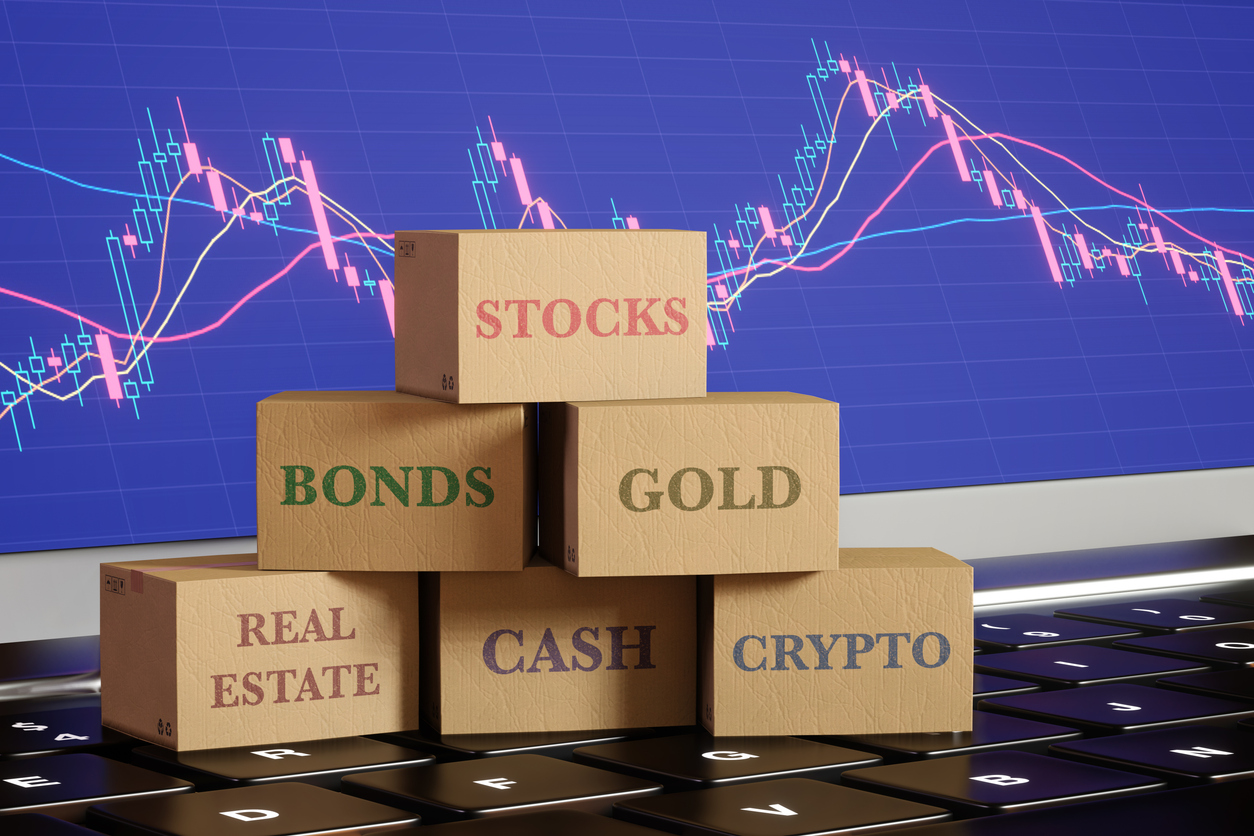
Real diversification goes further than equal-weighting a single index. It means owning assets driven by genuinely different forces: the concentration of wealth into the institutions that hold and move it, government spending and policy that follow their own calendar, the build-out of AI and the energy it consumes, and real assets that respond to something else entirely.
Consider gold. In the first quarter of 2026 alone, central banks purchased roughly 244 tonnes, about $37 billion worth (Source: World Gold Council, Q1 2026 Gold Demand Trends). That demand has nothing to do with earnings multiples or data-center capacity. It answers a different question, about currencies and reserves, and an asset that moves on that question can hold its footing when the market’s dominant bet does not. Each force in a portfolio should answer a different question. When one stalls, the others are not waiting on the same answer, and a portfolio spread across them does not need any single story to come true.
One Conviction, 400 Portfolios
The judgment behind this is specific. We would rather own durable, cash-generating businesses and real assets that do not all depend on the same driver than concentrate in whatever is leading this quarter. The winners we favor are frequently a different kind than the ones the market is rewarding now: businesses that compound through full cycles rather than names priced for a single outcome to arrive on time.
And here is the part that is easy to miss from the outside. Every portfolio is built the same disciplined way, so the thinking behind each one is consistent. What changes from client to client is the balance: how much a person holds in growth versus stability, and how it is sized to their stage of life. A client living on Social Security and a pension is weighted differently than one three decades from retirement, which is why two clients with the same account size can, and often should, hold different mixes. The discipline is shared. The fit is personal. And in every case the same rule holds: no single outcome is allowed to decide whether the plan works. An index offers no such fitting. Everyone who owns it carries the same concentration, whether it suits their life or not.
None of this means avoiding AI. It means declining to let a single thesis decide a lifetime of goals. The concentration in the index is real, and if it makes you uneasy, that instinct is sound. You do not have to bet against AI to refuse to bet everything on it.
Next week: why a portfolio built around many forces, not one, is designed to give a client room to stay patient when any single story is tested.