
Jeff Powell, Founder and Chief Executive Officer
Elevage Partners | November 17, 2026
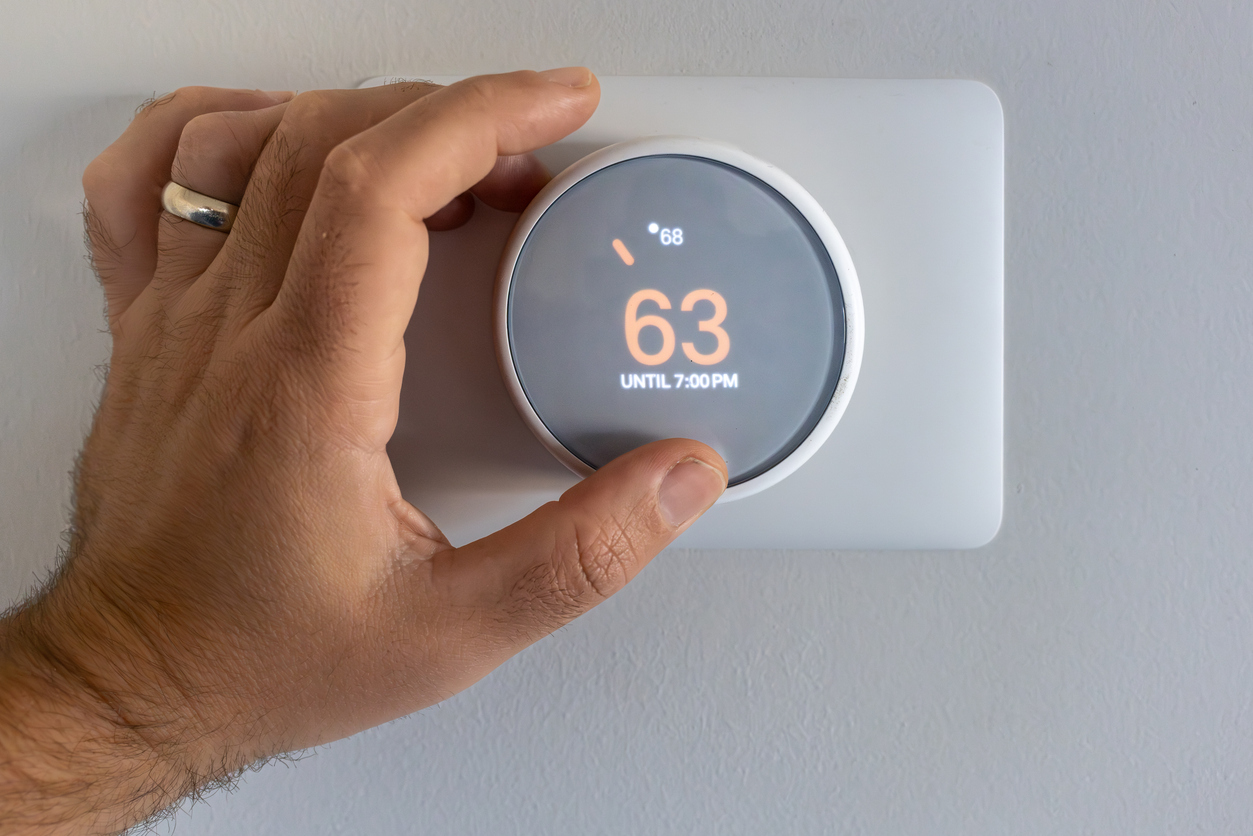
Picture a large house with a single thermostat. When the dial is adjusted to lower the temperature in the overly warm, sun-filled rooms, the temperature is simultaneously reduced in the rooms already cooled by the large shade trees outside their windows. The sunny rooms become more comfortable. The shaded rooms become too chilly. One thermostat. One temperature. Different degrees of comfort.

Last week brought news from the economy’s shaded rooms and its sunny ones. On Thursday, the National Association of Realtors reported that sales of existing homes fell 5.5% in October. By Friday, two Federal Reserve officials were saying that interest rates will likely need to go higher still, because inflation is running too hot. In our assessment, families tend to feel the chill in the shaded rooms long before the national numbers show it.
Why the Dial Keeps Turning
In the economy, the sunniest room right now is the race to build data centers for artificial intelligence. Chicago Fed President Austan Goolsbee called it “old-fashioned demand overheating,” and offered an everyday example: everyone trying to hire the same electrician at the same time. Then the electrician costs more for the data center and for the family with a broken furnace alike. The heat shows up in the national numbers, too: overall growth is running at an annual pace of about 3.4%, by the Atlanta Fed’s running estimate, and consumer prices rose faster in October than economists expected.
The difficulty is that raising rates does little to cool the sunniest room. Goolsbee has said higher rates may not do much to slow data center building, and that they work instead by slowing everyone else’s spending. So the Fed turns the dial because of the sunny rooms, and the chill lands mostly in the shaded ones.
Where the Chill Lands First
Housing is the first shaded room to feel a rate increase, because most home purchases start with a new loan. The average 30-year mortgage rate was 7.11% last week, up from 6.24% a year earlier, according to Freddie Mac. Fewer buyers can qualify at that rate, and the homes on the market sell more slowly. Factories that borrow to expand are another shaded room, cooling more quietly. Manufacturers in New York State reported in November that growth had slowed sharply from October. A business that borrows to buy equipment, like a family buying a home, tends to wait when the loan costs more.
What it Means for Families
For many of the families we work with, the chill in the shaded rooms shows up as a decision that has gotten harder.
A couple planning to sell the family home and move closer to their grandchildren may find that the home takes longer to sell, or draws fewer offers than a neighbor’s did a year ago, because fewer buyers can afford the payment. The plan that holds up is one that does not need the sale to close by a particular date. When the down payment on the next home, or the next year of living expenses, is already set aside, the home can wait for the right buyer.
A parent who wants to help an adult child buy a first home faces a different problem. At today’s rates, the monthly payment is often a bigger obstacle than the down payment. On a $400,000 loan, the rise in mortgage rates over the past year adds about $230 a month, by our count.
What We Are Watching
The risk now is that the Fed keeps turning the dial until every room in the economy is cold. Inflation has run above the Fed’s 2% target for more than five years. Will the Fed keep raising rates if hiring slows? No one knows yet. Hiring is one of the last numbers to move, which means that by the time jobs show the strain, the increases already made will still be landing.
For now, consumer spending is holding up, and employers are holding on to workers. Retail sales and weekly jobless claims are the two numbers we are watching most closely, because they are where we would expect the chill to show up next. If the chill does show up there while the Fed is still raising rates, the odds of a recession rise.
It is unsettling to hear that the economy is strong while a home down the street sits unsold for months. What holds steady is a plan that sets the timing of a home sale or a gift by a family’s own goals, whichever way the Fed moves.
If a decision like one of these is on your calendar, we’d welcome a note at info@elevagepartners.com.
Sources
National Association of Realtors, “Existing-Home Sales, October 2026,” November 12, 2026. October existing-home sales and the share of all-cash sales.
Reuters, “Fed’s Collins says more rate hikes are coming, Bloomberg Television reports,” November 13, 2026. Collins on tighter policy.
Federal Reserve Bank of Atlanta, “GDPNow,” November 17, 2026. Fourth-quarter growth estimate.
U.S. Bureau of Labor Statistics, “Consumer Price Index – October 2026,” November 10, 2026. October consumer prices.
ABC News, “Consumer prices increased 0.4% in October, higher than expected,” November 10, 2026. The economists’ expectation.
American Banker, “Fed’s Goolsbee says AI spending resembles demand shock,” November 2026. Goolsbee on demand overheating.
Reuters, “Fed likely to need to raise rates amid worsening inflation: Daly,” November 13, 2026. Daly on further rate increases.
Freddie Mac, “Primary Mortgage Market Survey,” November 12, 2026. 30-year mortgage rates.
Elevage Partners Research, “Monthly payment comparison,” November 16, 2026; calculations by Elevage Partners Research. The monthly payment difference.
Federal Reserve Bank of New York, “Empire State Manufacturing Survey, November 2026,” November 16, 2026. New York manufacturing activity.
Axios, “When AI is part of the inflation problem,” September 21, 2026. How rate increases cool demand.
U.S. Department of Labor, “Unemployment Insurance Weekly Claims,” November 12, 2026. Weekly jobless claims.
U.S. Bureau of Economic Analysis, “Real Personal Consumption Expenditures,” September 2026 data, FRED, Federal Reserve Bank of St. Louis. Consumer spending holding up.
U.S. Bureau of Economic Analysis, “Personal Consumption Expenditures Price Index,” March 2021 to September 2026 data, FRED, Federal Reserve Bank of St. Louis. Inflation above target since 2021.