
Jeff Powell, Founder and Chief Executive Officer
Elevage Partners | October 19, 2026
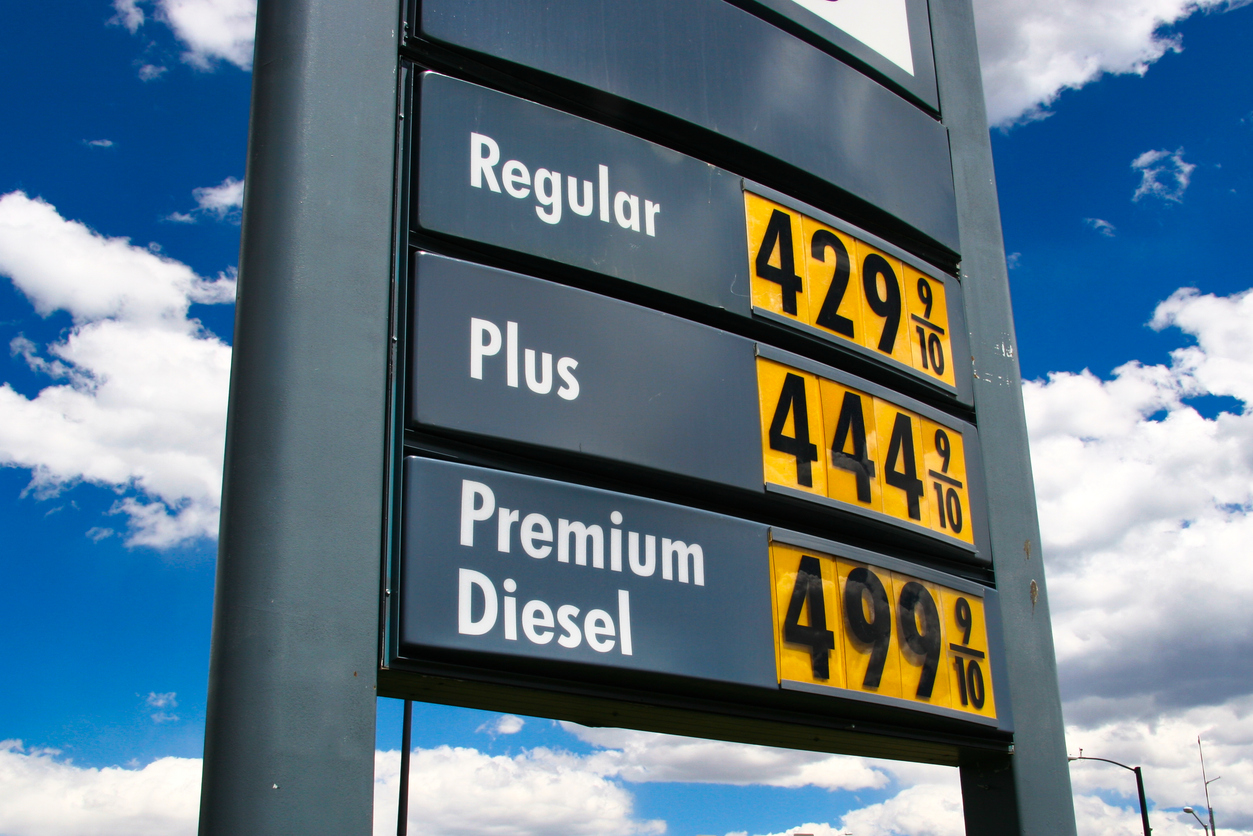
Gasoline costs about a third more than it did a year ago, according to the Bureau of Labor Statistics. That is the part of inflation everyone sees.
In our view, the pump is where inflation starts, not where it ends. Fuel is a cost inside nearly everything a household buys: the flight, the delivery, the groceries trucked to the store. When fuel prices jump, the rest of those prices follow in stages, and the last stage can arrive after the pump has already eased. The inflation reports released Oct. 14 and 15 show that trip under way.

Following Fuel From the Pump to the Shelf
The first stop is travel. Airline fares are 22.4% higher than a year ago, according to the Bureau of Labor Statistics, and we believe fuel explains much of that.
The second stop is freight. Producer prices measure what businesses charge each other before anything reaches a store. The price of trucking freight rose 2.0% in August and rose again in September.
Across the economy, producer prices rose 1.3% in September, the largest monthly increase since March 2022.
The third stop is the grocery store shelf, and it hasn’t moved yet. Prices dipped 0.1% in September and are up 1.8% from a year ago, about half the pace of inflation overall. But the prices food producers charge rose 1.2% in September alone. A store reprices last, after the farmer, the processor and the trucker have passed along their costs. In our assessment, the grocery aisle is where we could see the next wave of price increases.
What It Means for the Fed and Interest Rates
The Federal Reserve’s main tool is the interest rate, which is the price of borrowed money. Rate increases work by cooling borrowing and spending, and we believe they do little to lower the cost of a gallon of diesel. What the Fed watches most closely is whether higher costs are spreading beyond fuel and food, and in September they were. Consumer prices excluding food and energy rose 2.6% over the past year, up from 2.4% in August. Producer prices outside food, energy and trade are up 5.0% from a year ago.
In September the Fed raised rates for the first time since July 2023, and the question now is not whether it cuts but when it raises again. At Friday’s close, futures markets put about a 15% chance on another increase at the Oct. 27 and 28 meeting, and close to 90% odds of at least one more by December, according to CME’s FedWatch tool. In our view, the timing matters less than the direction.
In January, markets expected two to three rate cuts this year. Instead, the Fed has raised once, and we expect one more increase before year-end, in line with what markets now expect. Government spending and tariffs are feeding inflation, as we expected, and fuel is adding to it. If inflation doesn’t ease in the first quarter, we think one or two more increases could follow early next year.
We do not expect those increases to cause a recession. Earnings are strong, and we expect higher rates to slow growth without stalling it. What would change our mind is not a single report. It would take core inflation settling back at the Fed’s target for a sustained stretch, together with less federal borrowing. September moved away from that.
How It Comes Together
The daily moves in bond yields get the headlines, but the bigger change is where markets expect rates to go. The 10-year yield, the benchmark for most long-term borrowing, has climbed from 3.99% to 5.09% over the past year.
Higher rates and choosier lenders land hardest on companies that borrow heavily today for a payoff years away, and on the suppliers whose sales depend on that borrowing continuing. Much of the AI buildout fits that description. The Nasdaq fell 4.5% in the week ending Oct. 16, its worst week since late June, while healthcare, financial and energy stocks held up better. In our view, the most heavily indebted names are likely to stay the most volatile while this mix holds.
What It Means for the Portfolios We Manage
This is the environment the portfolios were built expecting. In the bond portion, we favor income backed by real collateral, and we use short-term and floating-rate holdings to limit the downward pressure rising rates put on bond prices. The bond portion exists so a client can stay invested in stocks through a full cycle.
On the stock side, we own businesses whose income tends to rise with inflation, such as energy producers and owned infrastructure, alongside large consumer and financial companies that have room to raise prices.
We also own some of the companies that supply the AI buildout, and we expect them to move more than the rest of the portfolio while rates and credit stay tight. The pressure on the sector is real right now, and the reason we own the leading suppliers rests on years of spending, not weeks. We believe that spending stays robust. We would rethink that if AI spending growth stalls before 2027–28, through guidance cuts or because the money to fund it dries up.
Pricing power is the other thing we are watching as third-quarter earnings arrive: whether companies can raise prices without losing customers. A month of data does not move a portfolio we expect to own for years. A change in what these businesses can earn would.
What Doesn’t Change
Inflation that moves in stages is hard to read from any single report, and one month of data won’t settle it. We will keep managing the portfolios for the world we expect and report what we do. If a stretch like this has you wondering how your plan holds up, that is exactly the conversation we want to have.
Sources
Bureau of Labor Statistics, “Consumer Price Index Summary – 2026 M09 Results,” October 14, 2026. Airfares, 12 months, Headline CPI, Grocery prices, Core CPI, and Gasoline, 12 months.
Bureau of Labor Statistics, “Producer Price Index News Release – 2026 M08 Results,” September 10, 2026. Trucking freight, August.
Bureau of Labor Statistics, “Producer Price Index News Release – 2026 M09 Results,” October 15, 2026. Trucking freight, September, PPI headline, PPI foods, September, and PPI ex food, energy, trade.
Elevage Partners Research, “Calculated from BLS September 2026 CPI,” October 14, 2026; calculations by Elevage Partners Research. Groceries about half of overall.
Federal Reserve Board, “Federal Reserve calendar, October 2026,” 2026. FOMC meeting dates.
Federal Reserve Board, “Federal Reserve issues FOMC statement,” September 16, 2026. September Fed hike.
CME Group, “CME FedWatch Tool,” October 16, 2026. Fed hike odds.
FactSet, “S&P 500 Earnings Season Update: October 16, 2026,” October 16, 2026. S&P 500 third-quarter earnings.
U.S. Department of the Treasury, “Daily Treasury Par Yield Curve Rates,” October 16, 2026. 10-year, one year.
Yahoo Finance, “Stock market today: Tech sell-off weighs on stocks to end volatile week,” October 16, 2026. Nasdaq weekly.
Zacks via Yahoo Finance; The Motley Fool, “Stock Market News for Oct 16, 2026; Stock Market Midday, Oct. 16,” October 16, 2026. Sector rotation.